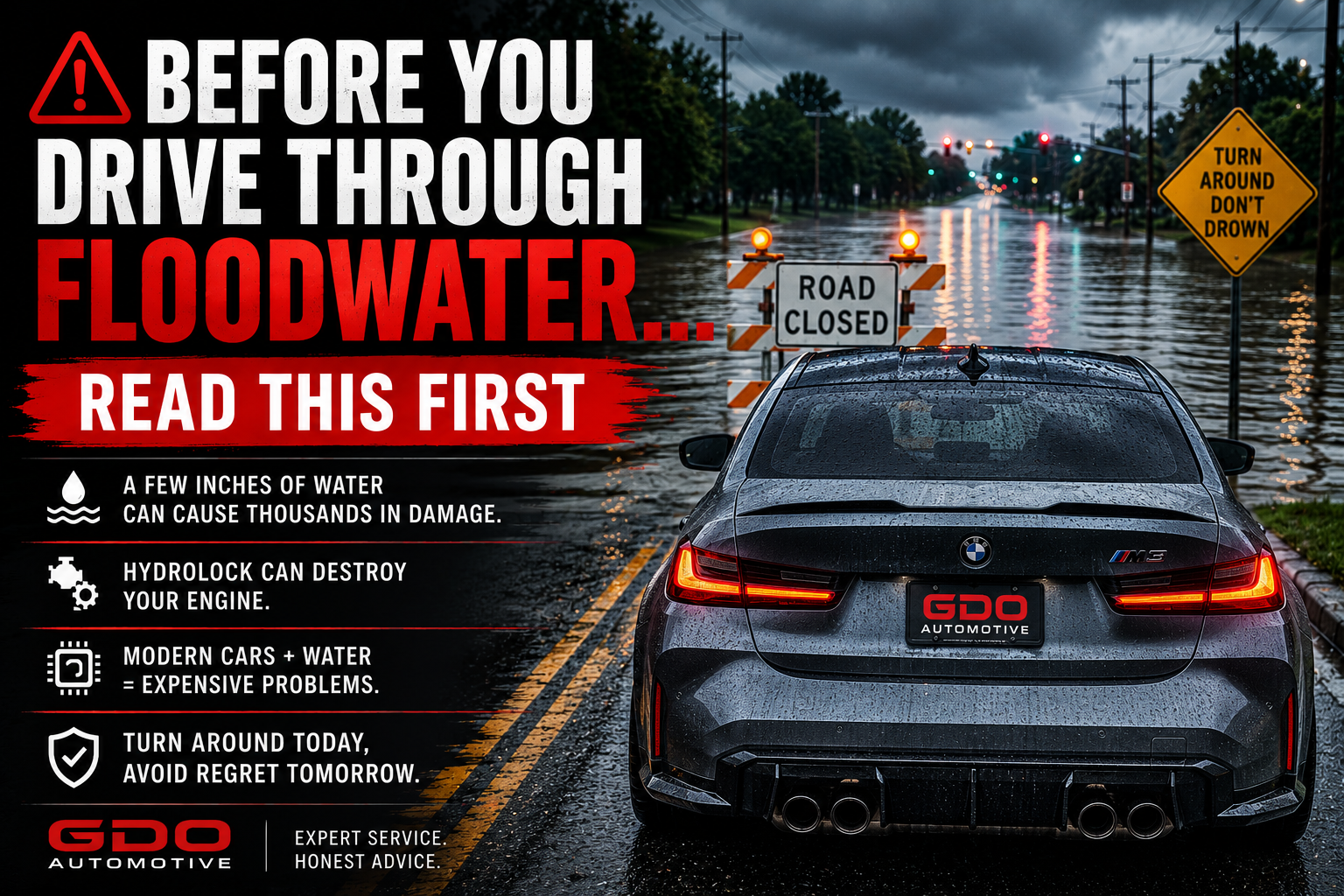
Recent storms across New Jersey brought record-breaking rainfall, flooded highways, stranded vehicles, and widespread flash flooding. While the storms have passed, many vehicles may still be at risk for hidden damage that isn’t immediately apparent.
At GDO Automotive, we’ve already begun inspecting vehicles affected by heavy rain and floodwater. Even if your vehicle appears to be driving normally, water intrusion can lead to costly mechanical and electrical issues days or even weeks later.
The Biggest Mistake Drivers Make
One of the most common mistakes is assuming that if another vehicle made it through standing water, it’s safe to follow.
Floodwater can conceal:
- Deep potholes
- Missing pavement
- Open storm drains
- Large debris
- Sharp objects
If you can’t see the road beneath the water, the safest choice is to turn around.
How Much Water Is Too Much?
It doesn’t take much water to create a dangerous situation.
- Approximately 6 inches of water can reach the underside of many passenger vehicles.
- Around 12 inches can reduce tire traction and begin lifting smaller vehicles.
- About 24 inches of moving water can carry away most vehicles, including SUVs and pickup trucks.
Myth: “I Drive an SUV—I’m Safe.”
Higher ground clearance helps, but it does not make a vehicle waterproof.
BMW X5s, X7s, Jeep Wranglers, pickup trucks, and other SUVs can all suffer severe engine damage if floodwater reaches the engine’s air intake.
What Is Hydrolock?
Hydrolock occurs when water enters the engine’s cylinders while the engine is running.
Because water cannot be compressed, internal engine components can bend or break almost instantly, often resulting in extensive engine damage or complete engine replacement.
If Your Engine Begins Running Rough
If your vehicle starts misfiring after driving through water:
- Do not continue accelerating.
- If the engine stalls, do not attempt to restart it.
- Turn on your hazard lights.
- Move to a safe location if possible.
- Arrange for the vehicle to be towed and inspected.
Attempting to restart a hydrolocked engine can significantly increase the damage.
Your Vehicle May Still Have Hidden Damage
Even if your vehicle continues to run normally, floodwater can affect sensitive electronic components, including:
- Engine control modules
- Transmission control modules
- Airbag systems
- Parking sensors
- Cameras
- Radar systems
- Comfort Access modules
- Wiring harnesses
Electrical issues often develop gradually and may not appear until days or weeks after exposure.
Water Inside the Cabin Is More Serious Than It Looks
Floodwater often contains contaminants such as:
- Oil
- Fuel residue
- Dirt
- Road salt
- Chemicals
- Bacteria
Simply drying the carpet isn’t enough. Moisture trapped beneath carpeting and insulation can lead to mold, corrosion, unpleasant odors, electrical problems, and damage to safety systems.
Professional drying should begin as soon as possible.
Don’t Forget About Your Brakes
After driving through deep water, lightly apply the brakes several times once it’s safe to do so. This helps dry the brake components and restore normal braking performance.
If Your Vehicle Hydroplanes
If your tires lose contact with the road:
- Stay calm.
- Ease off the accelerator.
- Hold the steering wheel firmly.
- Avoid sudden braking or sharp steering inputs.
- Allow the tires to regain traction naturally.
Inspect Your Vehicle After Heavy Rain
Following significant flooding or heavy rain, it’s a good idea to have the following inspected:
- Air filter
- Engine oil
- Transmission fluid
- Brakes
- Wheel bearings
- Electrical connectors
- Undercarriage
Early detection can prevent much larger repair bills.
Turn Around. Don’t Drown.
Flooded roads can change rapidly and conditions beneath the water are impossible to see.
No destination is worth risking your safety or your vehicle.
Think Your Vehicle Was Exposed to Floodwater?
If your vehicle encountered standing water during New Jersey’s recent storms, don’t wait for warning lights to appear.
GDO Automotive offers comprehensive post-flood vehicle inspections, including:
- Full vehicle diagnostics
- Engine inspection
- Fluid contamination checks
- Electrical system testing
- Suspension inspection
- Brake inspection
- Complete undercarriage evaluation
Flood damage isn’t always immediate. A professional inspection today can help identify hidden problems before they become major repairs.
If you have questions about your vehicle after recent flooding, contact GDO Automotive to schedule a post-flood inspection and drive with confidence.